
The Tech Behind the Luxury
July 6, 2026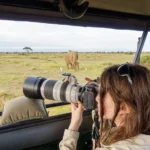
Stability in the Field
July 7, 2026Capturing the Contrast: Essential Camera Gear for a Dual Primate and Savannah Safari
A dual East African safari offers some of the most diverse photographic opportunities on earth. In a single itinerary, you might find yourself trekking through the dim, dense canopy of Bwindi Impenetrable National Park or Volcanoes National Park to lock eyes with a mountain gorilla, and days later, capturing a pride of lions traversing the vast, sun-drenched savannahs of the Queen Elizabeth National Park or the Serengeti.
However, photographing these two distinct environments requires vastly different camera setups. The dense, high-humidity rainforest demands fast lenses and excellent low-light performance, while the wide-open plains require significant focal length reach and dust protection.
To ensure you pack efficiently without missing a single iconic shot, here is the essential camera gear guide for a premium dual primate-and-savannah safari.
The Camera Bodies: Dual Setup is Essential
When moving between terrains, carrying two camera bodies is highly recommended. It eliminates the need to swap lenses in the field, which prevents dust from entering your sensor on the savannah and avoids missing fast-moving primate action in the forest.
- Primary Body: A full-frame mirrorless or DSLR camera with excellent high-ISO performance. Primate photography occurs under deep forest canopies where light levels are surprisingly low, making a sensor that handles noise exceptionally well crucial.
- Secondary Body: A fast-focusing cropped-sensor (APS-C) or full-frame body. A cropped-sensor body is highly advantageous on the savannah, as it provides a or “crop factor,” effectively extending the reach of your telephoto lenses.
The Lenses: Balancing Low Light and Long Reach
Selecting the right glass is the single most important factor for a successful photographic safari.
- For the Primates (Rainforest): You need a telephoto zoom with a fast, wide aperture—ideally a 70-200mm f/2.8. Because mountain gorillas and chimpanzees can be encountered at relatively close range (the legal minimum distance is 7 meters or about 23 feet), you do not need massive focal lengths. The wide f/2.8 aperture is vital for letting in enough light through the dense foliage while creating a beautifully blurred background that isolates your subject.
- For the Savannah (Plains): Distance is your main challenge here. A lens reaching 100-400mm or a fixed 200-600mm zoom is perfect for capturing distant leopards, birds, or hunting cheetahs. Apertures of f/4 to f/5.6 are perfectly acceptable on the bright plains.
- The All-Rounder: A standard walk-around zoom, such as a 24-70mm f/2.8 or 24-105mm f/4, is essential for sweeping landscape shots, lodge photography, and cultural interactions.
Support Systems: Lightweight and Versatile
- Monopod over Tripod: Heavy tripods are highly impractical in dense rainforests where you must hike through thick undergrowth, and they are unusable inside open-sided 4×4 safari vehicles. Instead, bring a lightweight carbon-fiber monopod or a versatile beanbag (which many high-end vehicles provide) to stabilize your heavy telephoto lenses on vehicle window frames.
Crucial Accessories for Extreme Microclimates
- Weather and Dust Protection: Savannahs are incredibly dusty, while rainforests are notoriously wet. Pack custom-fit silicone rain covers or heavy-duty plastic sleeves for your camera gear, alongside an abundance of microfiber cloths and a rocket blower to clear dust safely.
- Polarizing and UV Filters: High-quality UV filters protect your expensive lenses from stray branches during treks. Circular polarizers are invaluable on the savannah to cut down on harsh midday glare and enrich blue skies.
- Sufficient Power and Storage: Cold rainforest conditions and long days on game drives can drain batteries quickly. Carry at least three spare batteries per body and high-capacity, high-speed memory cards (UHS-II or CFexpress) to capture fast bursts of action without buffering.
Frame Your Perfect African Shot
Ready to capture the striking gaze of a mountain gorilla and the raw power of the savannah’s big cats through your own lens? Our safari specialists specialize in designing custom, photography-forward itineraries that give you optimal positioning, unhurried time in the field, and access to properties that cater directly to creative travelers. Let us manage the complex logistics so you can focus entirely on capturing the perfect shot.
Why Travel with East African Jungle Safaris?
- Tailor-made safari itineraries paced specifically to accommodate the needs of wildlife photographers
- Expert local guides who understand lighting, angles, and vehicle positioning for the ultimate shot
- Carefully selected lodges and camps featuring dedicated media charging stations and exceptional backdrops
- Gorilla permits and park logistics seamlessly secured and organized in advance
- Personalized service that guides you through every step of your travel planning
- Reliable support before, during, and after your safari for a completely stress-free experience
Request Your Personalized Safari Quote
Let us curate the ultimate photography expedition for you. Contact our team today to share your anticipated travel dates, the size of your group, and your specific wildlife photography goals.
- Website: www.eastafricajunglesafaris.com
- Email: info@eastafricajunglesafaris.com
- WhatsApp: +256 752 820818
Explore More: View our specialized [East African Photographic Safari Packages] or read our professional guide on [Ethics in Wildlife Photography: Mastering Primate Encounters Responsibly].
